Course Summary
The trauma of experiencing domestic violence can have an emotional and psychological impact on everybody and is often a key reason why some children and young people are in looked after care and support.
When caring for children who have witnessed domestic violence, it is important to have a good understanding of how this can impact them and how they may need to be supported.
This training course describe the meaning of ‘domestic violence’, actions which constitute domestic violence and explains potential immediate and long term emotional, psychological and behavioural impact on children and young people, families and support professionals.
This training course describes how potential characteristics associated with perpetrators of domestic violence can influence children and young people, reasons why it can be hard for a target of domestic violence to leave the home and consequently, how this can have an impact on the understanding of children and young people.
This training course describes links between domestic violence, attachment, metal heath and resilience and how this can be expressed by children and young people who may be struggling to understand their emotions.
This training course explains considerations to make in reducing risk and ensuring safe working practices relating to; contact visits with family, physical contact, allegations and absconding (attempting to go back to the perpetrator and/or family setting) and sexualised behaviour.
This training course explains different ways of providing therapeutic and emotional support and opportunities for children and young people who have experienced domestic violence. This is a Level 3 accredited course.
Course Learning Outcomes
Below are the main topics covered in this course, expand each one to see the criteria.
- 1.1Describe the meaning of ‘domestic violence’
- 1.2Explain actions which constitute domestic violence
- 1.3Analyse how so-called ‘Honour’ Based Violence’ links into domestic violence
- 1.4State UK legislation which protects people from domestic violence
- 2.1Explain and evaluate the immediate emotional, psychological and behavioural impact of experiencing domestic violence on children and young people
- 2.2Explain and evaluate the long term emotional, psychological and behavioural impact of experiencing domestic violence on children and young people
- 2.3Consider connections between domestic violence, attachment and mental health in children and young people
- 2.4Explain how the resilience of children and young people can be impacted by experiencing domestic violence
- 2.5Explain the impact of experiencing domestic violence on others associated with the child including family members and support teams
- 2.6Describe the meaning of ‘re-experiencing’ as a reaction to dealing with domestic violence and how this can be presented by children and young people
- 3.1Explain connections between domestic violence, attachment and mental health in children and young people
- 3.2Describe how potential characteristics associated with perpetrators of domestic violence can influence children and young people
- 3.3Explain reasons why it can be hard for a target of domestic violence to leave the home and how this can have an impact on the understanding of children and young people
- 3.4Explain how children and young people may be feeling follow their experience with domestic violence and being removed from the home environment for their own safety
- 3.5Describe the way in which contact visits with perpetrators of domestic violence and/or other family members can impact on children and young people
- 3.6Evaluate potential risks and benefits of supervised contact visits
- 3.7Explain considerations to make when supervising contact visits between children, young people, perpetrators of domestic violence and other family members
- 3.8Consider support requirements for when a child or young person returns to your care following contact visits
- 4.1Describe considerations to make in reducing risk and ensuring safe working practices relating to; Physical Contact, Sexualised Behaviour, Allegations and; Absconding (attempting to go back to the perpetrator and/or family setting)
- 4.2Describe the meaning of ‘empathetic listening’ and how this plays a part in supporting children and young people
- 4.3Define the meaning of ‘later life letters’ (relevant to adoption situations only) and how this links to historical domestic violence and trauma
- 4.4Explain the importance of consistency and structure as a way of providing support
- 4.5Explain different ways of providing therapeutic and emotional support and opportunities for children and young people who have experienced domestic violence
Who is this course for?
This Domestic Violence Training Course is designed for professionals working with children and young people including support teams and foster carers.
Duration
1 day course - we can be flexible on start and finish times to suit your needs such as school run friendly times.
Availability
This Domestic Violence Awareness Training Course is offered in two delivery formats:
- Remote Online: Led by a live tutor via Zoom or Microsoft Teams, allowing participants to join remotely. (Also known as virtual classroom training)
- Face-to-Face: Delivered in person at your location or a venue you arrange. (Also referred to as on-site training)
View a comparison of Remote and in-person face to face training .
Complete our quick enquiry form for a price and available dates.
Certification
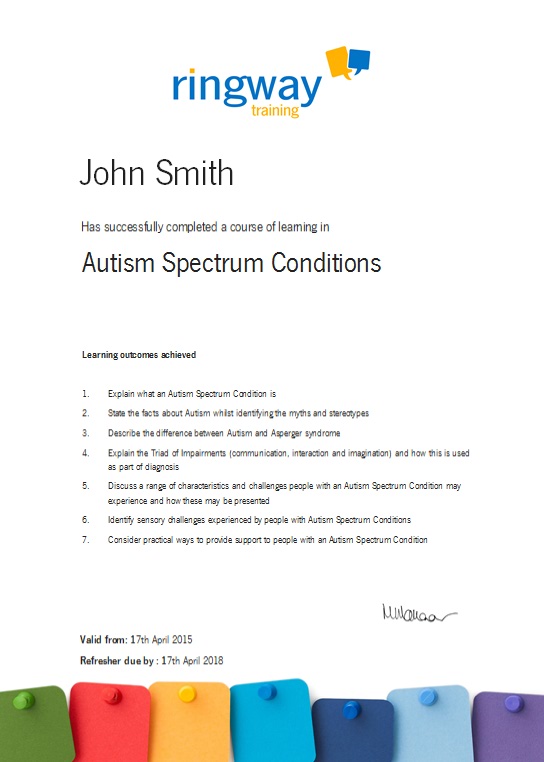
Each learner completing this course will receive a digital (PDF) certificate of learning.
Accreditation
The course contents are accredited by the Open College Network (OCN) Credit4Learning as a Level 3 course.
Choose the learning environment that works best for you: our expert-led training is offered in two convenient formats - remote tutor led online or in person face to face.
Flexible start and finish times to suit you. Contact us for available dates.
The course contents are accredited by the Open College Network (OCN) Credit4Learning as a Level 3 course.
Get a Price or more information...
Just fill in this quick form and we will email you an all inclusive price, don't worry we will never add you to any marketing lists - promise. If you want more information first thats great - just get in touch
Clear pricing
We ask for location (for face to face training) and approximate numbers because we include any expenses in the quotes we give so you get one clear price - no surprise added extras
More Information?
If you have any questions, want more information or interested in a series of courses please contact us
Contact Us