Course Summary
Supporting children and young people in care, either in residential support or as a foster carer, is a rewarding and motivating profession and provides many opportunities to see young people develop and thrive.
For many young people, being in care can be challenging and they may have experienced a difficult early life including trauma, neglect and abuse and the impact of this can be shown through behaviour which can be challenging.
One of the most important parts of the role in supporting vulnerable children and young people is to continue to promote positive behaviour, through individual support, therapeutic approaches and role modelling.
This training course describes the meaning of the term ‘behaviour which can be challenging’ and explains how behaviour can be perceived in different ways and by different people whilst identifying individual approaches to responding and evaluating how this can promote the diversity of a support team.
This training course explores the importance of recognising our own approaches to behaviours as a way of supporting vulnerable young people and evaluates the impact of stress and how everybody reacts to stress in different ways which identifying strategies to support ourselves and colleagues in managing stress.
This training course explains potential reasons why some young people in care may present certain behaviours and how a young person’s history, early life experiences may have influenced on behaviours including attachment, trauma, abuse and neglect and also potential issues relating to misunderstanding of neurodiversity such as autism, ADHD or dyslexia. This training course also explains how loss and separation can be linked to young people and behaviours. This course examines the theory that ‘every behaviour has a positive intent’.
This training course defines initial information about a young person which can support positive behaviour planning whilst identifying key components of an affective behaviour support plan and resources to use as part of support planning.
This training course discusses de-escalation strategies and calming techniques and compare the advantages and limitations of the ‘Ignore – Divert - Confront’ model of dealing with challenging situations.
This training course identifies ways to assess resilience levels in young people and how and why support for staff teams who are dealing with challenging situations and promoting positive behaviour approaches is essential (including debriefing).
(Please note that this course is a course of non-intervention techniques and theories and does not include any practical physical intervention techniques).
Course Learning Outcomes
Below are the main topics covered in this course, expand each one to see the criteria.
- 1.1Describe the meaning of the term ‘behaviour which can challenge’
- 1.2Explain how behaviour can be perceived in different ways and by different people
- 1.3Define the meaning of ‘conflict’ as part of dealing with challenging behaviours
- 2.1Explain and evaluate the importance of recognising our own approaches to behaviours as a way of supporting positive behaviour
- 2.2Evaluate the impact of stress on performance and how everybody reacts to stress in different ways
- 2.3Describe ways to support ourselves and colleagues in managing stress
- 3.1Explain reasons why some young people in care may present certain behaviours
- 3.2Describe how a young person’s history and early life experiences may have influenced on behaviours including attachment, trauma, abuse and neglect
- 3.3Explain how loss and separation can be linked to young people and challenging behaviours
- 3.4Define the meaning of neurodivergence and how this can link into responses, reactions and ways of processing information
- 3.5Consider potential ‘triggers’ and ‘hotspots’ which may lead to challenging situations and best ways to reduce the impact
- 3.6Explain the importance of empathetic communication
- 3.7Describe considerations to make in terms of our own body language and behaviour mirroring when promoting positive behaviours
- 3.8Explain the impact of promoting positive approaches using praise, motivation, self-image, belonging, trust and care
- 4.1Define initial information about a young person which can support positive behaviour planning
- 4.2Explain and evaluate the theory that ‘every behaviour has a positive intent’
- 4.3Explain key components of an affective behaviour support plan
- 4.4Identify resources to use as part of positive behaviour support planning
- 4.5Explain and evaluate de-escalation strategies and calming techniques
- 4.6Compare the advantages and limitations of the ‘Ignore – Divert - Confront’ model of dealing with challenging situations
- 4.7Describe ways to safeguard and respond to behaviours which can challenge
- 4.8Explain how and why support for staff teams who are dealing with challenging situations and promoting positive behaviour approaches is essential (including debriefing)
Who is this course for?
This positive behaviour training course is designed for professionals working with children, young people and adults including support teams, education professionals and foster carers.
Duration
1 day course - we can be flexible on start and finish times to suit your needs such as school run friendly times.
Availability
This positive behaviour support course is offered in two delivery formats:
- Remote Online: Led by a live tutor via Zoom or Microsoft Teams, allowing participants to join remotely. (Also known as virtual classroom training)
- Face-to-Face: Delivered in person at your location or a venue you arrange. (Also referred to as on-site training)
View a comparison of Remote and in-person face to face training .
Complete our quick enquiry form for a price and available dates.
Certification
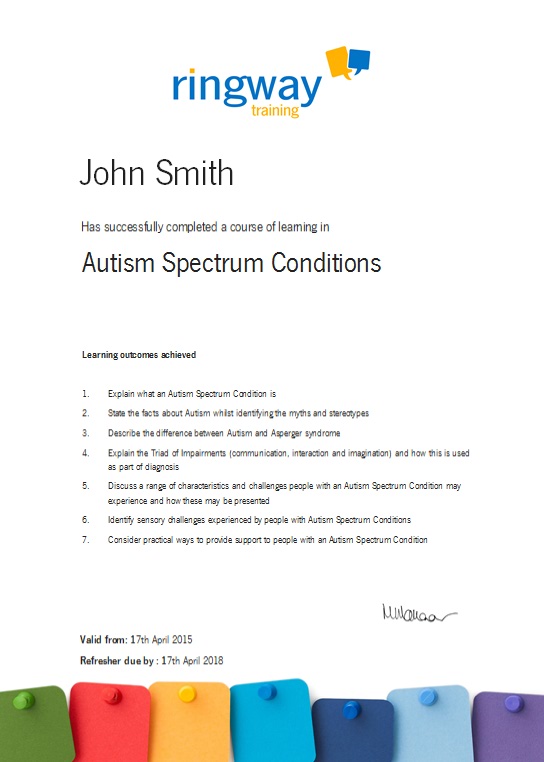
Each learner completing this course will receive a digital (PDF) certificate of learning.
Accreditation
The course contents are accredited by the Open College Network (OCN) Credit4Learning as a Level 3 course.
Choose the learning environment that works best for you: our expert-led training is offered in two convenient formats - remote tutor led online or in person face to face.
Flexible start and finish times to suit you. Contact us for available dates.
The course contents are accredited by the Open College Network (OCN) Credit4Learning as a Level 3 course.
Get a Price or more information...
Just fill in this quick form and we will email you an all inclusive price, don't worry we will never add you to any marketing lists - promise. If you want more information first thats great - just get in touch
Clear pricing
We ask for location (for face to face training) and approximate numbers because we include any expenses in the quotes we give so you get one clear price - no surprise added extras
More Information?
If you have any questions, want more information or interested in a series of courses please contact us
Contact Us